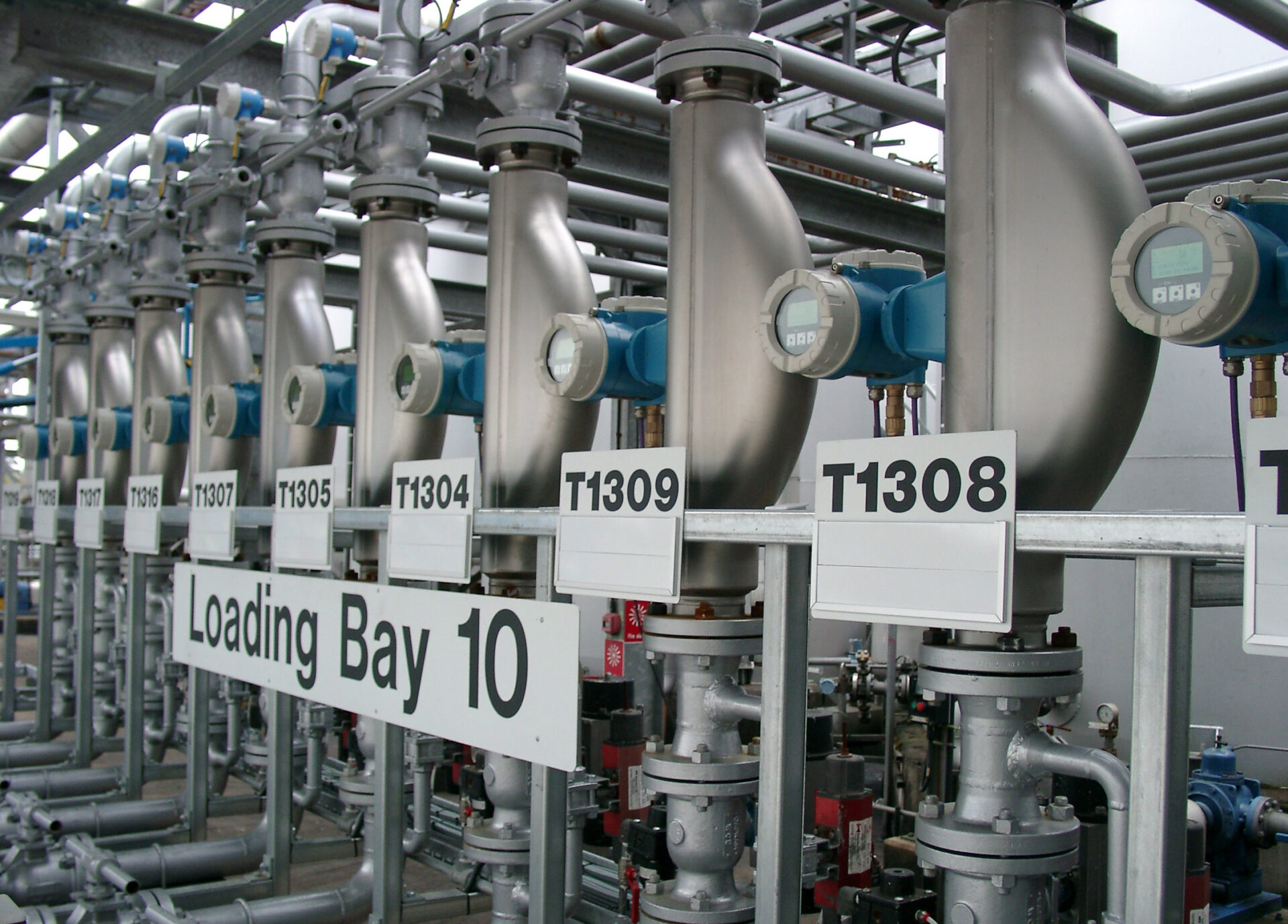
Coriolis flowmeter offers accurate and reliable flow measurement across applications
Mason Flannery is a product marketing manager here at Endress+Hauser, specializing in flow measurement technologies. To help answer some frequently […]

5 things to know about TDLAS gas analyzers, natural gas and H₂S measurement
We talked with Alan Garza, Endress+Hauser’s Advanced Analysis product expert, about tunable diode laser absorption spectroscopy TDLAS technology, challenges in the natural gas and moisture measurement process and more.
Really, the challenges come in many shapes and forms. First off, you have the challenge of supplying the sample gas to the analyzer properly. When sending a sample to a TDLAS analyzer, the gas travels from the tip of the probe to the analyzer, but to stay in the same (gas) phase that is flowing through the pipeline, a few things have to be known and acted upon:
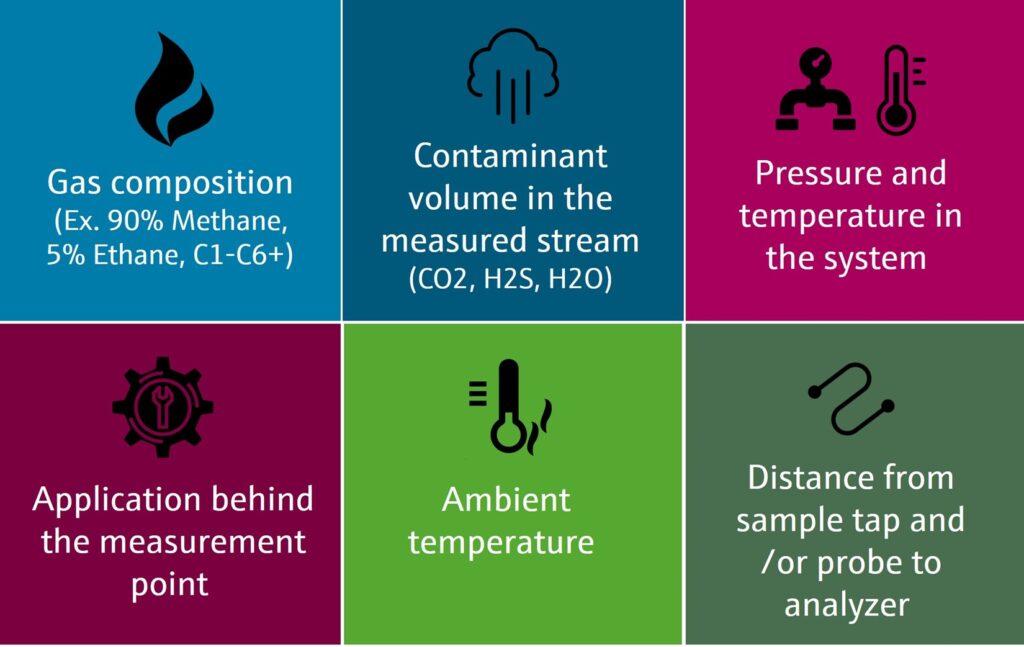
Once we have this data, our team can advise what is needed for the sample conditioning and the proper analyzer that could maximize the customer’s best results.
The second challenge is getting accurate and repeatable measurements. Depending on the type of analyzer and the science behind the software and hardware, accuracy can range from +/- ppbv (parts per billion by volume) to lbs/mmscf (million standard cubic feet) of a difference.
This is why proper material matters. You want to make sure your hardware is:
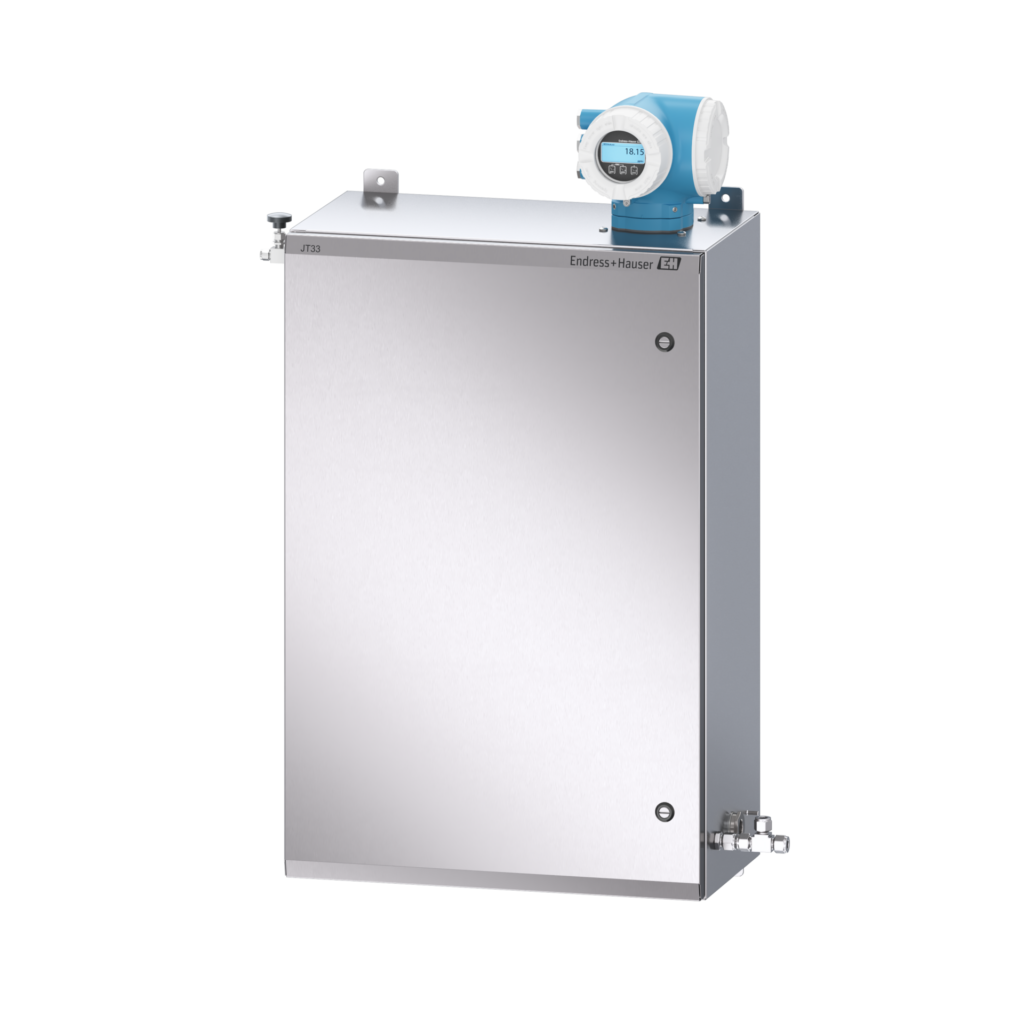
In the spirit of innovation, we launched the JT33 gas analyzer in 2024 to provide more than just an accurate and repeatable measurement of H2S in natural gas. JT33 TDLAS analyzer was designed with the end user in mind and was built with a user-friendly interface, best available accuracy in its class, an intuitive menu and integrated diagnostics for easy reporting and monitoring.
Not only can the webserver be accessed via the Modbus TCP/IP connection but also through the service port who is physically located on the transmitter. No software download is required to access or utilize functions within webserver.
Modularity and increased uptime are functional designs that are unique to this analyzer. It was designed to be highly field serviceable. The goal is to allow the customers the freedom to repair their analyzer without the need to send it back to us for repair. Giving the customer the freedom to decide when and where to service their analyzer if needed.
Endress+Hauser’s JT33 gas analyzer offers continuous, real-time H2S measurement with low maintenance requirements. It enables plant operators and owners to meet gas quality standards, improve process control and ensure asset integrity. Using proven differential technology, JT33 tolerates stream changes while meeting measurement performance specifications. It also features auto-validation and advanced diagnostics supported by Heartbeat Technology for verification reporting.
The latest features include:
Customers wanted a modern trace‑H₂S analyzer capable of maintaining accuracy even as gas composition fluctuates. The JT33 meets this need through its advanced differential spectroscopy, enabling accurate trace measurements during rapid changes in some background gases. With more than 20 years of improved algorithms and enhanced performance over legacy models, the JT33 consistently delivers high‑confidence H₂S readings across a wide range of natural gas applications.
With new wave of field engineers to the Natural Gas industry a modern platform was designed to help bridge generational gaps in how our users interface with analyzers. JT33 addresses this shift with a clean HMI and a web server requiring no special software, and remote-access troubleshooting features that resemble the tools today’s engineers already use. Its memory modules, diagnostics and logging functions simplify set‑up, support and training. This was brought in to help bridge generational gaps and reducing reliance on tribal knowledge that was common with older platforms.
Customers also emphasized safety, uptime and ease of maintenance, which JT33 addresses through its Class I, Division 1 / Zone 1 hazard‑area rating and a modular architecture designed for quick, safe field service. This allows technicians to complete repairs in the field without returning the unit to the factory.
You can visit our website, find and contact your local representative or give us a call at 888-363-7377!
Mason Flannery is a product marketing manager here at Endress+Hauser, specializing in flow measurement technologies. To help answer some frequently […]

Discover the top 10 most viewed blogs of 2022 covering challenges and solutions across all industries May 9, 2023 – […]
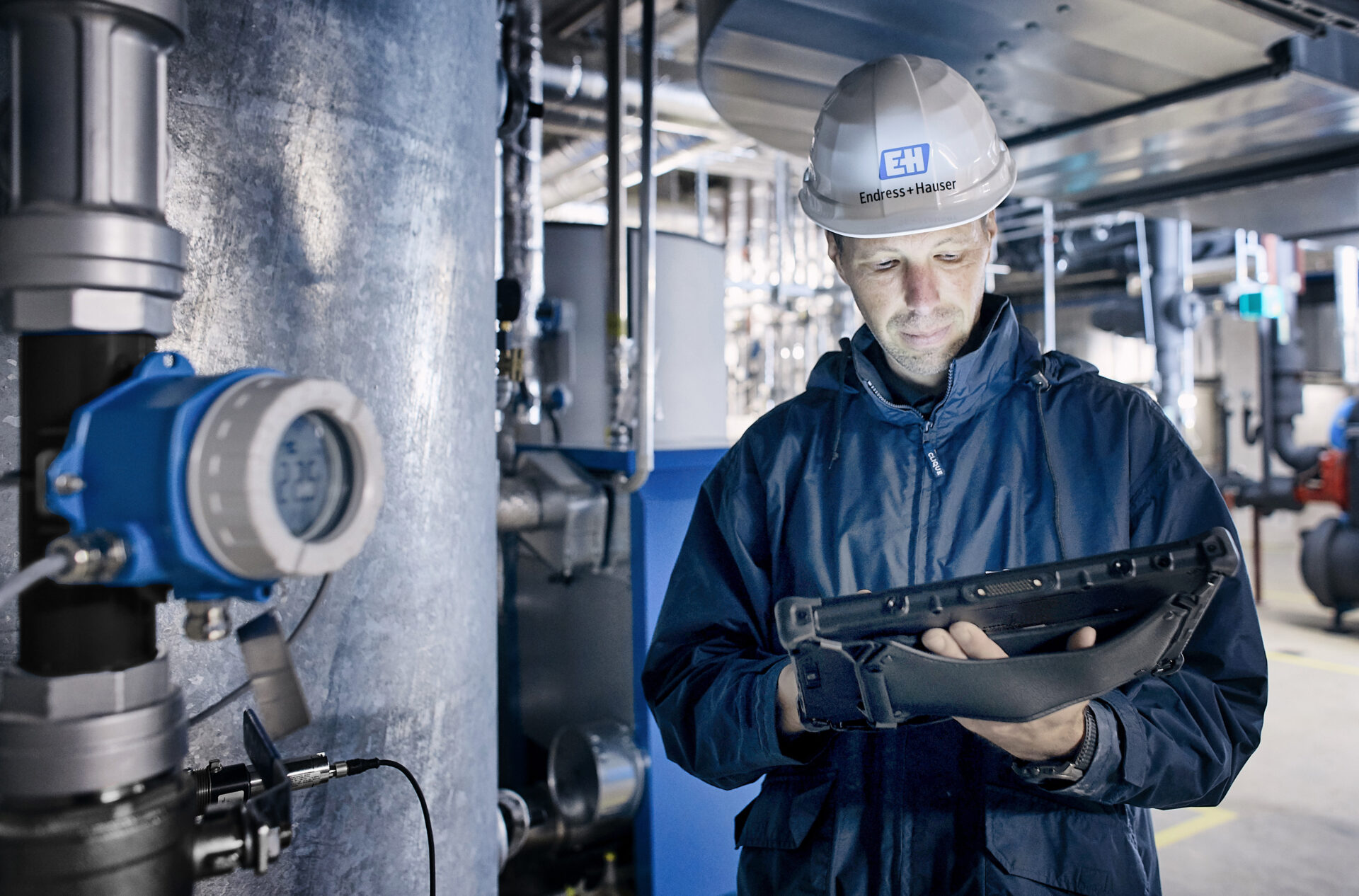
Navigating today’s uncertain economic and regulatory landscape requires market agility, achievable on a foundation of technological preparedness and strategic vision […]